
The Hidden Cost of “Bling”: Why Your Low-Profile Run-Flats Might Be Killing Your Alloys
We’ve all been there: admiring a set of beautiful, diamond-cut 20-inch alloys in a showroom. They look incredible, but in the UK, where potholes seem to multiply overnight, that “big wheel” aesthetic comes with a technical trade-off that many owners only discover when they see a “Low Tyre Pressure” warning light that won’t go away.
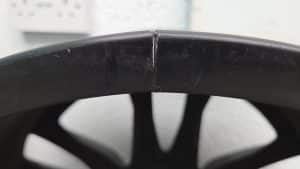
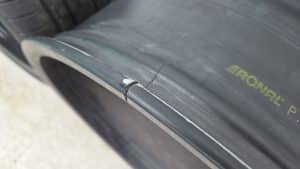
The culprit? Often, it’s the combination of large wheels and low-profile Run-Flat Tyres leading to hairline cracks in your alloy wheel..
Why Wheels Crack
Think of a standard tyre like a high-quality running shoe—it has a thick, flexible sole that absorbs the impact of the pavement. A low-profile run-flat tyre, however, is more like a pair of dress shoes, they look lovely but the soles are hard and unforgiving.
Run-flats are designed with reinforced, extra-stiff sidewalls. This allows them to support the weight of the car even with zero air pressure. While this is a great safety feature, it creates a problem for your wheels:
- Zero Cushioning: Because the sidewalls are so rigid, they don’t flex as much when you hit a bump – or a deep pothole…
- Energy Transfer: On a low-profile tyre (35 series and lower), there is very little rubber between the road and the rim. When you hit a pothole, the tyre doesn’t absorb the energy; it passes that shock directly into your expensive alloy wheel.
- Stress Fractures: Constant high-energy impacts on the inner lip of the wheel can lead to hairline cracks. These cracks let air seep out slowly, leading to a slow puncture that no amount of air can fix. Sometimes they cause a total failure with air escaping as fast as you can put it in!
The Case for Swapping to “Normal” Tyres
Many UK drivers are now ditching run-flats in favour of conventional tyres (often called “Go-Flat” tyres). Here’s why it might be a brilliant strategic move:
- Ride Comfort: You’ll immediately notice a smoother, quieter ride. The flexible sidewalls of normal tyres act as secondary suspension.
- Wheel Protection: A softer tyre provides a buffer for your expensive alloys, significantly reducing the risk of cracking – in fact I haven’t come across a cracked wheel that is shod with normal low profile tyres (that isn’t to say it never happens!)
- Cost Savings: Normal tyres are typically 20–30% cheaper to replace and, unlike run-flats, can often be repaired if you get a simple nail in the tread.
Don’t Get Stranded Though!
Most cars fitted with run-flats from the factory do not have a spare wheel. If you swap to normal tyres, you lose that “50 miles at 50mph” safety net. You must have a backup plan, in fact it’s a legal requirement to have a method of replacing or inflating a puncture:
Option A: The Puncture Repair Kit (Sealant & Compressor)
This is the most common solution and the one that most manufacturers provide these days, they take up less space and are lighter, leading to improved fuel efficiency. The kit consists of a bottle of sealant and a 12v compressor.
- Pros: Lightweight, fits in the side compartment of the boot.
- Cons: Only works for small punctures in the main tread; won’t help with sidewall damage or large gashes.
Option B: The “Space Saver” Spare
You can buy an aftermarket space saver wheel, or a manufacturer space-saver kit that includes a slim wheel, a jack, and a wheel brace.
- Pros: Guaranteed to get you home regardless of the type of tyre damage.
- Cons: Takes up boot space unless your car has a dedicated space for one – and when they do you’ll find your full size wheel doesn’t fit in it!
Is there anything you can do to reduce the risk of pothole damage?
The best way to prevent wheel or tyre damage is to avoid potholes altogether. Easier said than done sometimes, I know! But there are ways you can give yourself a helping hand.
- Reaction Time: Leave enough space between you and the vehicle in front of you so you can see the road ahead. You’re more likely to see a pothole and have time to avoid it, and you also have time to react to what the vehicle in front does. If they swerve, or move to one side of their lane you know there’s a good chance they’re trying to avoid something. This is especially important if you are on a road you are not familiar with, locals will know where the potholes are and you can use that to your advantage.
- Keep on top of your maintenance: Make sure your tyre pressures are correct and be mindful that air temperature has an effect on tyre pressures – cold air will cause tyre pressures to drop, warmer air causes them to increase. Check your tyres when they are cold and adjust accordingly. It’s good practice to check your tyres for damage at the same time, if any have a bulge in the sidewall you should replace them.
- Swap to standard tyres: As your tyres wear and you need to naturally replace them, it might be worth changing them to standard tyres – just make sure you do this as axle pairs, don’t run a run flat on one side and a standard tyre on the other.
- Report potholes: Your local council will have a place on their website to report potholes, it’s worth taking a couple of minutes out of your day to do so. Don’t assume someone else has already done it. If they don’t know about it they can’t fix it.
Summary
The cost of motoring is increasing all the time, as is the general cost of living. We can all do without the additional repair costs, and making a claim against your local council almost always ends up being rejected these days. They are as cash strapped as the rest of us! Swap to non-run flat tyres if you can – just make sure you have an inflation kit or spare so you don’t fall foul of the law – and give yourself space to react to dangers on the road. And don’t forget to check your tyre pressures and look for sidewall damage regularly.
If you do end up with a cracked alloy wheel it is likely to call an MOT failure. They can be welded but it isn’t always effective and the wheel will always be weaker in that area and is likely to crack again. It is a popular choice though since it’s significantly cheaper than replacing the wheel.
January Motorist Checklist
Since we’re in the heart of winter, don’t forget your monthly essentials:
- [ ] Wipers: Check for splits or other damage, replace blades if they leave streaks or don’t clear your windscreen.
- [ ] Washer Fluid: Use a winter-grade mix to prevent the fluid from freezing, you won’t be able to clear traffic film from your windscreen at best, and at worst, this could lead to a split reservoir or damaged pump.
- [ ] Tyre Pressure Check: Cold temperatures cause air pressure in your tyres to drop, check them while they are cold to make sure they are at the right pressure. You’ll find the correct specification on the driver’s door B Pillar (sometimes the passenger side), on the back of the fuel cap, or in your owners manual
- [ ] Slow Starting: Look for signs that your engine is taking longer to start than usual, February is usually the coldest month and can expose problems with your starter motor, battery, alternator. Fixing an issue now can prevent you from becoming stranded when it gets really cold.