
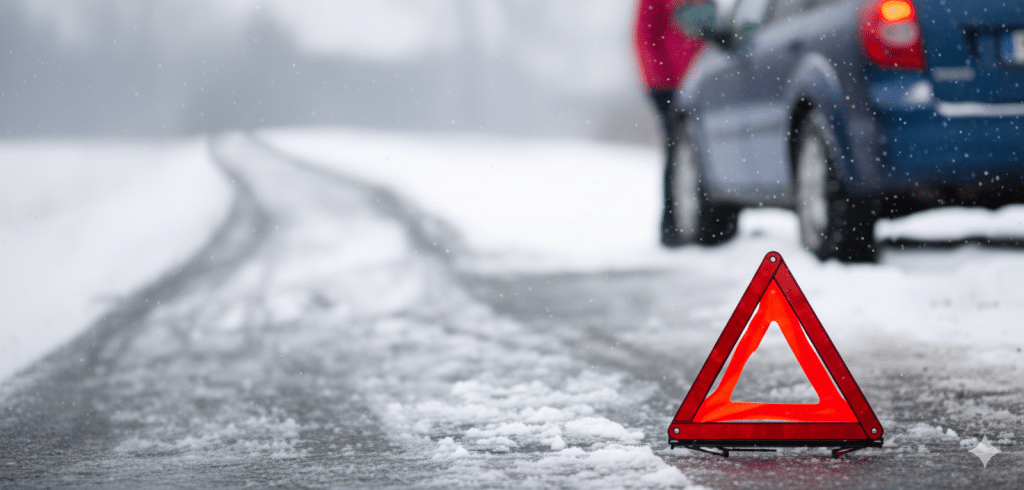
The weather forecast for next week suggests a significant shift toward wintry conditions, bringing the risk of snow, ice, and freezing rain to the roads. When the mercury drops, the margin for error on the road shrinks.
Preparing now—rather than waiting for the first flake to fall—can be the difference between a minor inconvenience and a dangerous situation. Here is how to prepare your vehicle and yourself for the coming week.
1. Prepare Your Vehicle: The “FORCES” Check
A winter breakdown is often preventable with a few minutes of maintenance. Use the FORCES acronym to ensure your car is up to the task:
- Fuel: Keep your tank at least half full. If you get stuck in traffic or a snowdrift, you’ll need the engine running to keep the heater on.
- Oil: Ensure your oil levels are topped up; cold starts put extra strain on your engine.
- Rubber: Check your tyre tread. While the legal limit is 1.6mm, safety experts recommend at least 3mm for winter grip. Ensure pressures are correct, as cold air causes them to drop. If you have access to winter tyres now is the time to fit them, a front wheel drive car with winter tyres will perform better in the snow than a 4×4 on summer tyres.
- Coolant: Check that your radiator has the correct 50/50 mix of water and antifreeze to prevent the engine block from freezing.
- Electrics: Check all lights (including fog lights) and your battery. Batteries over 5 years old are the #1 cause of winter breakdowns because cold temperatures reduce their cranking power.
- Screenwash: Use a high-quality winter additive that won’t freeze at -15°C or lower.
2. Pack an Emergency “Grab Bag”
If the worst happens and you are stranded, your car becomes a metal box that loses heat rapidly. Keep these items in your boot:
|
Category |
Essential Items |
|
Warmth |
Heavy blankets or a sleeping bag, spare warm coat, gloves, and a hat. |
|
Visibility |
A high-visibility vest and a powerful LED torch (with spare batteries). |
|
Tools |
A sturdy ice scraper, de-icer spray, and a small shovel. |
|
Power |
A fully charged power bank for your phone and a set of jump leads. |
|
Food |
High-energy snacks (protein bars, chocolate) and bottled water. |
3. Driving Techniques for Snow and Ice
Driving in winter requires a “smooth and slow” philosophy. Sudden movements are what trigger skids.
- Pulling Away: Use second gear and ease your foot off the clutch gently to avoid wheel spin.
- Stopping Distance: Increase your following distance to ten times the normal gap. Braking distances on ice are significantly longer than on dry tarmac.
- If You Skid: If the back of the car starts to slide, steer into the skid (e.g., if the back slides right, steer right). Do not slam on the brakes, as this will lock the wheels and cause a total loss of control.
- Hill Climbing: Leave a large gap for the car in front to clear the hill before you start your ascent, so you don’t have to stop midway.
4. Personal Preparedness: Before You Turn the Key
Before setting off next week, ask yourself: “Is this journey essential?” If you must travel, tell someone your route and expected arrival time. Clear all snow from your car—including the roof. Snow sliding down onto your windshield while braking, or flying off into the car behind you, is a major hazard and can lead to a fine for “driving without due care and attention.”