
PS – did you know we manufacture fully road legal number plates in house? If your’s are currently illegal now is a great time to put that right!
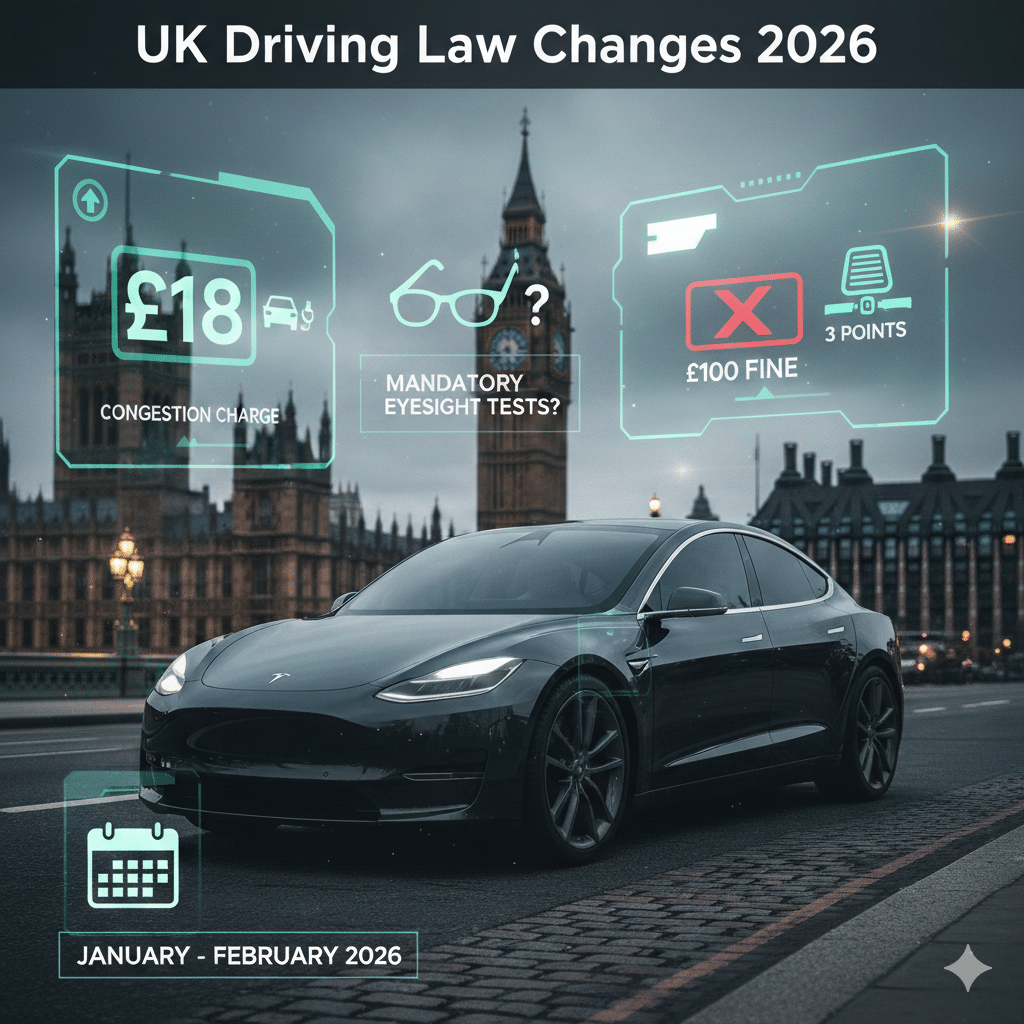
UK Driving Law Changes 2026: What’s New This January and February?
For UK motorists, 2026 has already begun with a significant shift in road safety policy and urban enforcement. While many regulations are phased in over the year, January and February have seen the introduction of several critical updates—from tougher safety consultations to the official end of major tax exemptions.
Here is a breakdown of the new rules, regulations, and consultations affecting UK drivers as of early 2026.
1. The London Congestion Charge Hike
As of January 2, 2026, the daily cost of driving into central London has increased. Transport for London (TfL) has raised the Congestion Charge from £15 to £18.
Perhaps more significant for green commuters is the reduction of the Cleaner Vehicle Discount. For the first time, electric vehicles (EVs) are no longer exempt from the charge.
- Electric Cars: Now receive a 25% discount (costing £13.50 per day).
- Electric Vans/HGVs: Now receive a 50% discount.
- Note: These discounts only apply if your vehicle is registered for Auto Pay.
2. Major Safety Strategy Consultations
On January 7, 2026, the Department for Transport (DfT) published its new Road Safety Strategy, launching several high-profile consultations that could change the law by the end of the year:
- Lower Drink-Drive Limits: The government is consulting on reducing the limit in England and Wales to 50mg of alcohol per 100ml of blood (matching Scotland’s stricter limit).
- Mandatory Eyesight Tests for Over-70s: Currently, older drivers self-declare their fitness to drive. New proposals suggest mandatory eyesight checks every three years for those aged 70 and over.
- Graduated Licensing for Young Drivers: This includes potential night time driving restrictions and limits on carrying passengers of a similar age for newly qualified drivers under 24.
3. Stricter Licence Renewal for Over-65s
Starting in January 2026, the DVLA has introduced a more robust medical declaration process for licence renewals for those aged 65 and over.
While there is no “automatic ban,” drivers are now required to provide more detailed evidence regarding conditions like heart health and diabetes. The “20-metre test” (reading a number plate from five car lengths away) is being enforced more strictly during these renewals.
4. New Roadside Technology and Penalties
February marks the wider rollout of advanced ANPR (Automatic Number Plate Recognition) cameras. These “super cameras” are specifically calibrated to detect:
- “Ghost Plates”: Reflective plates designed to hide from speed cameras.
- Tinted/Smoked Plates: Any darkening of a plate now carries an immediate £100 fine.
- Seatbelt Penalty Points: Under the new safety strategy, failing to wear a seatbelt is transitioning from a simple fine to a 3-point penalty on your licence.
5. Simplified EV Charging Rules
In a bit of good news for EV owners, new planning regulations came into effect in January 2026 for homeowners in England.
You can now install a domestic EV charging point on your driveway without needing planning permission in most cases—even if it is visible from the road. This change removes the previous £258 application fee and significantly speeds up the transition to home charging.
That’s all for now, have a great day!